
Table Of Contents
What Is The Thyroid Gland?
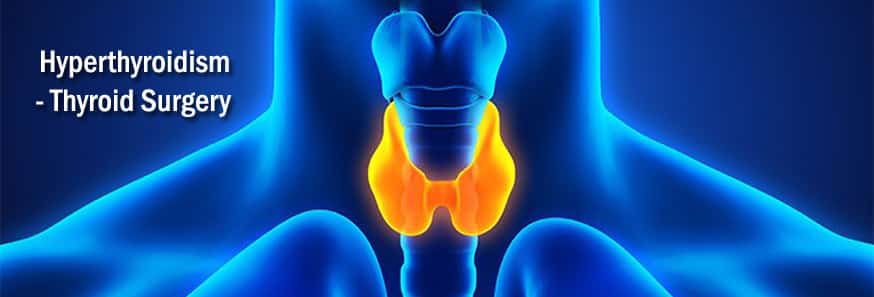
The thyroid is a small, butterfly-shaped gland that sits at the front of your neck. It produces hormones that control your metabolism. This means it influences how fast or slow your heart beats, how your body uses energy, your body temperature, your weight, and even your mood.
When the thyroid produces too much or too little hormone, the imbalance shows up in the form of several symptoms. In India, it is estimated that around 42 million people live with some form of thyroid disease. Even though this condition can often be treated with medicine, in some cases, a thyroid surgery may become necessary.
Dr. Venu Gopal Pareek has extensive experience in identifying when thyroid conditions need surgical intervention. He has over 22 years of experience in the field and is regarded as the best thyroid surgeon in Hyderabad. He has honed his surgical hands in over 10,000 successful surgeries and can help you, too, to get rid of your thyroid issues.
In this article, we’ll detail when a thyroid condition goes beyond medication and when surgery is actually needed. Keep reading.
Why May A Thyroid Surgery Be Needed?
Most thyroid conditions respond well to medication or other non-surgical treatments. But there are situations where surgery becomes the most appropriate or even the only viable option. Here are the main reasons a doctor may recommend thyroid surgery.
- A Nodule Or Goiter Is Causing Physical Discomfort.
Sometimes, the thyroid gland grows large enough to press against the windpipe or food pipe. This can cause difficulty in breathing, a persistent cough, or trouble swallowing. When this happens, removing the thyroid or, at least, a part of it is often the most effective solution.
- The Nodule Is Cancerous Or Suspected To Be.
If a biopsy or scan suggests that a thyroid nodule may be cancerous, surgery is typically recommended to remove the affected tissue before the cancer spreads. Thyroid cancer, when caught early, has very high survival rates.
- Hyperthyroidism That Doesn't Respond To Treatment.
Some patients with an overactive thyroid do not respond well to medication or radioactive iodine therapy. In these cases, surgically removing the thyroid gland can provide a permanent solution.
If your thyroid condition falls into any of these categories, your doctor may bring up the option of surgery. But not all thyroid surgeries are the same. Let's look at the different types.
Different Types Of Thyroid Surgeries
When a doctor recommends thyroid surgery, he may suggest total or partial removal. Depending on how much is removed, thyroid surgeries are classified into three types. Here they are.
Hemithyroidectomy: This involves removing only one lobe of the thyroid gland. It is typically recommended when a nodule or abnormality is confined to just one side. Since a portion of the thyroid remains, many patients can continue producing hormones naturally without needing lifelong medication.
Total Thyroidectomy: This is the complete removal of the thyroid gland. It is the most common surgical approach for thyroid cancer, large goiters, or severe hyperthyroidism. After a total thyroidectomy, the patient will need to take thyroid hormone replacement medication for the rest of their life.
Thyroidectomy With Lymph Node Removal: When thyroid cancer has spread or is suspected to have spread to nearby lymph nodes, the surgeon may remove those nodes along with the thyroid. This is called a neck dissection.
The type of surgery is just one part of the decision – how it's performed matters just as much. And that brings us to two advanced surgical techniques that only well-trained and experienced doctors can perform. Let’s understand them below.
Laparoscopic Vs. Robotic Thyroid Surgery
Traditional thyroid surgery involves an incision at the front of the neck. While it is effective, it does leave a visible scar – something many patients, understandably, feel conscious about. This is where minimally invasive approaches like laparoscopic and robotic surgery come in.
Laparoscopic Thyroid Surgery: In laparoscopic thyroid surgery, the surgeon makes small incisions and uses a thin camera and long instruments to remove the thyroid. Because the incisions are smaller and often hidden away from the neck (like in armpit or chest), scarring is significantly less visible. Recovery time is also much faster.
Robotic Thyroid Surgery: Robotic surgery takes minimally invasive surgery a step further. The surgeon operates using a robotic system that offers greater precision, a wider range of motion, and a magnified 3D view of the surgical area. The incisions are small and discreet, just like in the laparoscopic technique. In addition, there is less risk of damage to surrounding structures like the vocal cords or parathyroid glands.
Both approaches are safe and effective when performed by an experienced surgeon. The doctor can suggest one of the two, depending on the size of the thyroid and the nature of the condition.
But if the robotic approach is more advanced, why do doctors recommend it for more critical cases only? The answer is: cost. Below is how these surgeries fare against each other as far as the price is concerned.
How Much Does A Thyroid Surgery Cost?
Thyroid surgery costs can differ quite a bit from one patient to another. A lot depends on how much of the gland needs to be removed. A partial removal is naturally priced less than taking it out entirely. The reason for surgery matters too; a goitre or overactive thyroid is a different level of complexity compared to thyroid cancer, which may also require lymph node removal. In addition, the type of surgical approach, the duration of hospital stay, and post-operative care are also considered.
Here is a rough estimate of what thyroid surgery costs in Hyderabad might look like:
- Partial Thyroidectomy: ₹50,000 to ₹80,000
- Total Thyroidectomy: ₹75,000 to ₹1,30,000
- Thyroid Cancer Surgery: ₹1,00,000 to ₹2,50,000
Thyroid surgery is covered under most insurance plans when it is medically necessary. Do confirm with your insurer what the post-surgery treatments, like radioactive iodine therapy, will be covered for as well.
If you are looking for a surgeon who brings both care and expertise to thyroid surgeries in Hyderabad, Dr. Venu Gopal Pareek is a name worth knowing, and here is why.
Why Choose Dr. Venu Gopal Pareek For Thyroid Surgery?
Thyroid surgery demands a level of precision and expertise that Dr. Venu Gopal Pareek has consistently delivered throughout his surgical career. He begins by conducting a meticulous review of each patient's condition, ensuring that surgery is only recommended when truly necessary and that the chosen approach aligns with the patient's overall health profile. His command over modern thyroid surgical techniques helps minimize risk to surrounding nerves and tissues, making the procedure as safe as possible. Post-operatively, his team remains actively involved in monitoring recovery and managing any concerns that may arise. Patients trust Dr. Pareek not just for his technical skill, but for the reassurance and clarity he brings to what can often be an anxious and overwhelming experience.
FAQs
Can thyroid conditions be treated without surgery?
Yes, in many cases, they can be treated with medications and radioactive iodine therapy. Surgery is typically considered only when these treatments are ineffective, the gland is causing physical symptoms, or there is a suspicion of cancer.
Will I need to be hospitalized after thyroid surgery?
Yes, but only for a day or two. Most thyroid surgery patients are discharged after an overnight stay.
Is thyroid surgery performed under general anesthesia?
Yes, thyroid surgery is always performed under general anesthesia, meaning you will be completely asleep during the procedure.
Will my voice change after thyroid surgery?
Some patients experience temporary hoarseness after surgery because the nerves controlling the vocal cords lie very close to the thyroid. In most cases, this resolves on its own within a few weeks.
How soon can I return to work after thyroid surgery?
Most patients return to desk jobs or light work within one to two weeks. Those with physically demanding jobs may need to wait three to four weeks before resuming full activity.
Can a removed thyroid gland grow back?
No. Once thyroid tissue is surgically removed, it does not regenerate. This is why patients who undergo a total thyroidectomy require lifelong hormone replacement.